
12 Business Christmas and Holiday Card Trends for 2026
If you're planning a business holiday mailing for 2026, the biggest design shift is clear: companies still want festive cards, but they also want styles that feel more branded, tactile, and intentional. This year’s strongest business holiday card trends blend polished typography, elevated paper, modern color palettes, and thoughtful personalization—so your Christmas card or holiday greeting feels current without losing warmth. Whether you prefer classic Christmas imagery, premium foil accents, minimalist layouts, or custom photo cards, the best design is the one that reflects your brand and feels memorable in the mailbox.
Below, we’ve updated our trend list with a fresh 2026 outlook while keeping the proven ideas customers still love. You’ll find a mix of classic favorites and emerging directions across color, finish, typography, format, and paper stock, plus tips on how to choose the right style for your business.
What’s new for 2026?
Compared with recent holiday seasons, 2026 leans more tactile and editorial. Traditional holiday red and green still matter, but they’re being softened with warmer neutrals, mineral tones, winter whites, and metallic details. Typography is becoming more expressive, premium stocks are doing more of the design work, and business senders are putting more thought into how a card reinforces their overall brand style. In other words: the best holiday cards no longer rely on decoration alone—they win through design choices that feel cohesive, current, and personal.
- Best for classic brands: heritage imagery, refined foil, and traditional greetings.
- Best for modern brands: editorial layouts, bold type, and minimalist color stories.
- Best for high-touch outreach: premium paper, embossing, soft-touch coating, and custom messaging.

1. Quiet Luxury Finishes
One of the biggest new directions for 2026 is quiet luxury: cards that feel elevated through material and finish rather than busy artwork. Think subtle foil, blind embossing, clean margins, refined metallic accents, and premium cardstock that feels substantial in hand. This approach works especially well for companies that want their Christmas cards to feel polished, understated, and executive-friendly.

2. Modern Heritage
Vintage holiday cards are still relevant, but in 2026 they feel more curated than retro. The updated look combines nostalgic scenes, classic flourishes, and familiar Christmas iconography with cleaner layouts and a more premium presentation. For businesses, this style is a smart way to feel traditional and trustworthy without looking dated.

3. Expressive Serif Typography
Bold typography remains important, but the 2026 version is more editorial. We’re seeing more high-contrast serif fonts, oversized greetings, elegant mixed-font pairings, and sharper hierarchy between the headline and message. Whether your card says Merry Christmas, Season’s Greetings, or Happy Holidays, type is doing more of the storytelling this year.

4. Editorial Minimalism
Minimalist holiday cards are evolving from simple to intentionally styled. In 2026, the standout minimalist designs use strong spacing, restrained color, premium paper, and a purposeful message rather than minimalism for its own sake. This trend is ideal for brands that want clean design without losing seasonal warmth.

5. Softened Classic Holiday Colors
Classic red and green are not going anywhere, but many 2026 holiday cards are softening those standards with pine, spruce, merlot, cranberry, champagne, bone, oatmeal, and warm taupe. The result is festive, but more versatile for business brands that want seasonal color without overcommitting to a brightly traditional palette.

6. Die-Cuts, Gatefolds, and Layered Formats
Another rising 2026 trend is more physical dimension. Gatefold cards, layered constructions, unique silhouettes, and die-cut details make a holiday greeting feel interactive before the recipient even opens it. For direct mail, format can be as memorable as artwork—especially when you want your business holiday card to stand apart from standard flat mailers.

7. Brand-Forward Photo Storytelling
Photo cards are still strong, but the 2026 shift is toward more intentional business storytelling. Instead of using a photo simply because it is available, companies are choosing images that communicate culture, milestones, team spirit, location, or community impact. When paired with clean typography, photo holiday cards can feel highly personal and very brand-aware.

8. Refined Geometry and Deco Details
Art Deco influence is still present, but it is becoming more selective. Rather than full-theme glamour, many 2026 cards use geometric framing, symmetry, metallic linework, or structured compositions to create a polished seasonal look. This makes the trend more adaptable for professional brands that want elegance without excess ornamentation.

9. Celestial Winter Palettes
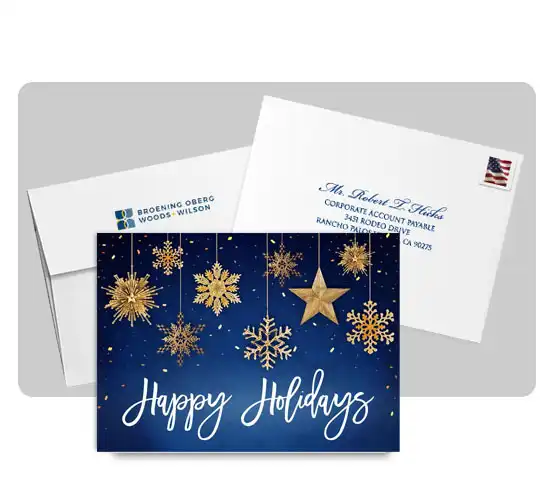
Moody designs continue to perform, but the newer version is more celestial than dark-for-dark’s-sake. Midnight blue, black spruce, silver, starlight, and low-contrast shimmer create a winter atmosphere that feels modern and upscale. This is a strong option for businesses that want holiday cards with depth, drama, and an elevated tone.

10. Hand-Drawn and Artistic Holiday Motifs
Abstract art remains relevant, but 2026 is bringing in more hand-rendered energy—illustrated shapes, sketch-like linework, painterly textures, and softer artistic imperfections. This helps a holiday card feel more human and less template-driven, which is valuable for brands that want to look creative, thoughtful, and current.

11. Sense-of-Place Scenic Design
Scenic designs continue to resonate because they create emotional context. In 2026, the strongest scenic cards feel less generic and more rooted in place—winter roads, countryside views, neighborhood scenes, or regional landscapes that help your greeting feel grounded and sincere. For local businesses, this can be a subtle but powerful branding cue.

12. Custom Cards with Brand System Thinking
Custom cards are no longer just a catch-all option—they’re a strategic trend. Businesses are using holiday cards as part of a broader seasonal brand system, aligning the card with website banners, email greetings, social graphics, and year-end outreach. If your company needs exact colors, logos, typography, or messaging, a custom holiday card offers the most flexibility.
How to choose the right holiday card trend for your business
The right design depends on the message you want to send. If you want a timeless corporate look, start with classic layouts, premium paper, and subtle foil. If your brand is more modern, minimalist and typography-led cards can feel clean, current, and memorable. If relationship-building is the goal, photo cards and custom holiday cards can add a personal touch that scales well for customer, client, and employee mailings.
As you compare options, pay attention to more than artwork alone. Paper stock, texture, finish, envelope presentation, personalization, and message tone all shape how recipients perceive your brand. A holiday card is small, but the design details communicate quality.
Helpful shopping links
Ready to make a memorable impression this holiday season?
Explore business holiday cards that combine festive style with thoughtful branding. Whether you want a traditional Christmas card, a custom design, a photo card, or a premium foil finish, the best 2026 holiday trends all come down to one thing: choosing a card that feels authentic to your business.
Holiday Card Trends FAQ
What are the biggest business holiday card trends for 2026?
The biggest trends for 2026 include quiet luxury finishes, expressive serif typography, softened classic holiday palettes, editorial minimalism, custom brand-forward cards, tactile paper textures, and dimensional formats like gatefolds or die-cuts.
Are Christmas photo cards still popular for businesses?
Yes. Photo cards remain popular because they help businesses feel more personal. For the strongest result, choose images that support the brand story, such as a team photo, building, work in action, anniversary moment, or community event.
What colors are trending for corporate holiday cards in 2026?
Popular colors include softened red and green, forest and spruce tones, champagne, winter white, navy, silver, oatmeal, warm taupe, and other mineral-inspired neutrals. These palettes feel festive while staying polished enough for professional brands.
What paper stocks and finishes make a holiday card feel premium?
Premium holiday cards often use heavy cardstock, linen texture, uncoated or soft-touch finishes, foil stamping, embossing, and layered construction. These details improve tactile quality and give the greeting more staying power.
Should businesses choose Christmas cards or more inclusive holiday cards?
It depends on your audience. Christmas cards work well when that message directly reflects your brand and recipient base. Broader holiday greetings are often a smart choice for diverse customer and client lists.
What is the best holiday card style for a professional brand?
Many professional brands do best with typography-led designs, balanced layouts, premium paper, subtle metallic accents, and concise messaging. The goal is to look warm and memorable without feeling overly casual.
When should companies order holiday cards?
It is best to start reviewing designs in early fall so there is enough time for customization, proofing, addressing, and mailing. Early planning also gives you better selection across premium and custom options.
Can a business holiday card still feel personal when ordering in bulk?
Yes. Personalized signatures, names, custom messages, brand colors, photo choices, and carefully selected design styles can all make a large mailing feel more thoughtful.